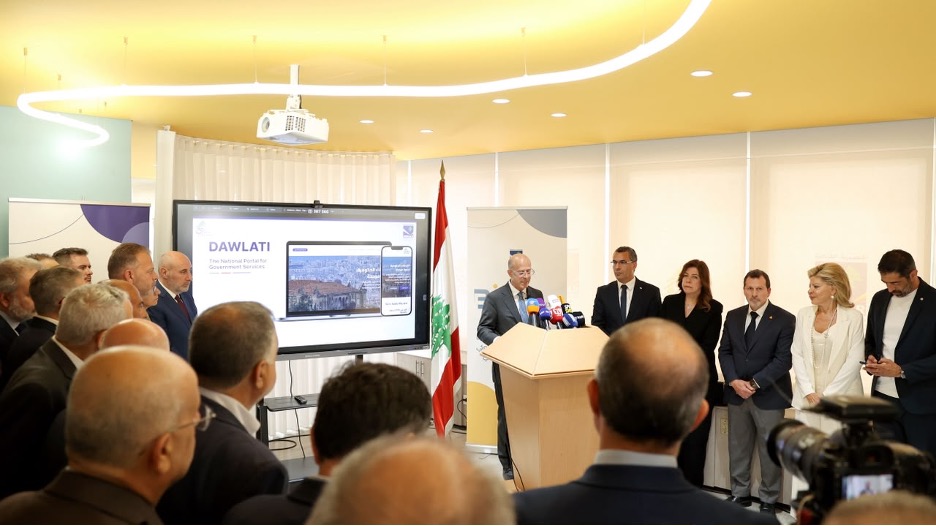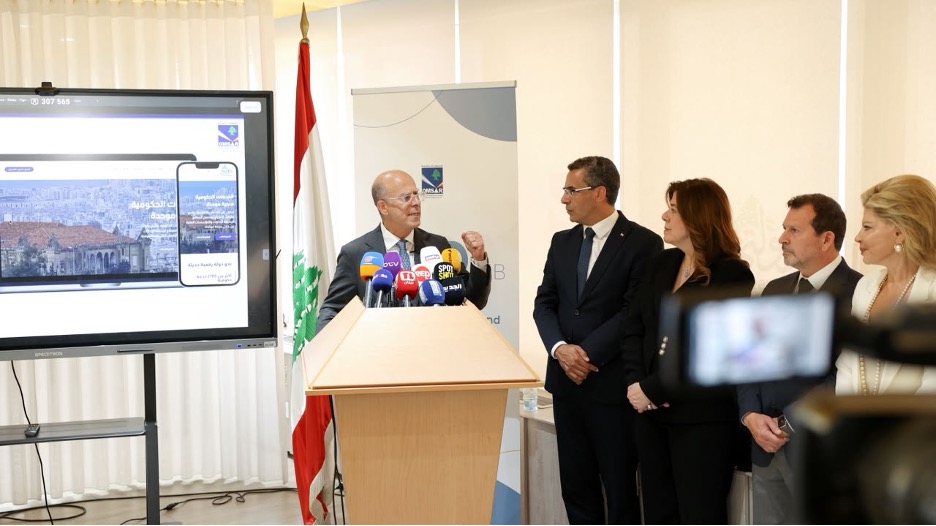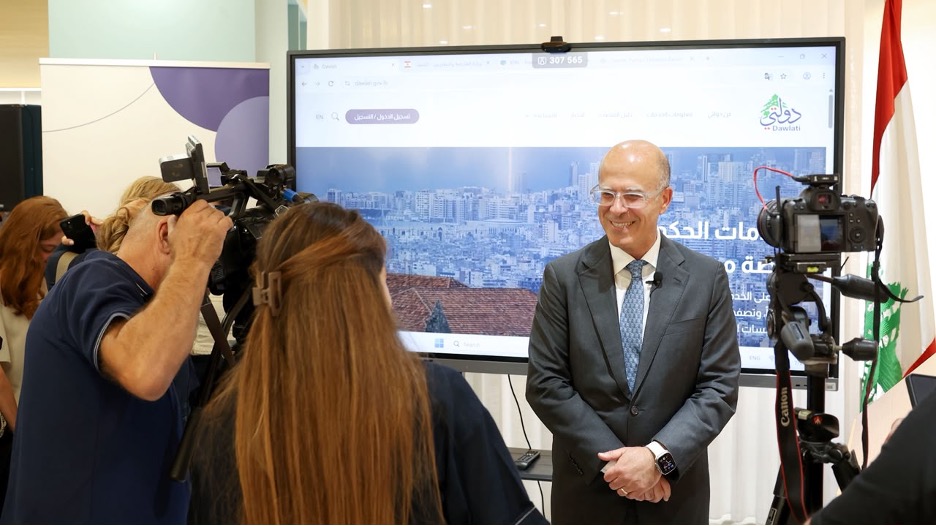
The Ministry of State for Administrative Reform (OMSAR) officially launched Dawlati, Lebanon’s unified digital government portal, during a ceremony held at the Ministry’s Behavioral Insights and Digital Transformation Lab (BIND-Leb). The event brought together government officials, members of the diplomatic corps, representatives of international organizations, academics, and public sector leaders.
The launch of Dawlati was led by Minister of State for Administrative Reform, Dr. Fadi Makki, together with the Ministry’s Digital Transformation Unit, as part of the Ministry’s broader Reinventing Government 2030 reform agenda. The initiative aims to modernize public administration, accelerate digital transformation, improve the quality and efficiency of public services, strengthen transparency, and combat corruption.
Dr. Makki emphasized that:
“Dawlati is not merely a digital platform; it is a practical tool designed to simplify citizens’ lives by making public services easier to access, clarifying administrative procedures, reducing bureaucracy, and strengthening transparency and trust between citizens and the state.”
Dawlati serves as Lebanon’s unified gateway to government services, enabling citizens and businesses to access public services and government institutions through a single digital portal. The platform fulfills three primary functions:
- Providing fully digital public services, allowing users to submit applications, track their progress, complete transactions online, and make electronic payments where applicable.
- Directing users to existing digital services hosted on the platforms of other public administrations.
- Providing comprehensive information for services that remain paper-based, including required documents, applicable fees, application procedures, and the responsible public authority.
As part of the Ministry’s citizen-centered approach to service delivery, Dawlati incorporates the principle of improving the citizen journey by allowing users to initiate requests and complete supporting documentation through a more flexible process, reducing unnecessary visits to government offices and saving both time and effort.
During its initial phase, the platform offers 12 digital services provided by the Ministry of Agriculture, the Ministry of Tourism, the Investment Development Authority of Lebanon (IDAL), and the Council for South Lebanon, with additional services from other ministries and public institutions to be integrated progressively.
The platform also supports the Ministry’s anti-corruption efforts by standardizing administrative procedures, clearly presenting required documents, fees, and processing stages, and enabling citizens to track their applications electronically. These features reduce administrative discretion while enhancing accountability and transparency across the public sector.
Dr. Makki stressed that the launch of Dawlati forms part of a broader vision to redesign government services around citizens’ needs and transition toward a more efficient, agile, and digitally enabled public administration. He added that the initiative empowers public institutions to continuously improve their services with the support of the Ministry’s Digital Transformation Unit and Center of Excellence.
The launch ceremony was attended by Minister of Agriculture Dr. Nizar Hani, Minister of Youth and Sports Dr. Nora Bayrakdarian, Minister of the Displaced and Minister of State for Technology and Artificial Intelligence Dr. Kamal Shehadi, and a representative of Deputy Prime Minister Dr. Tarek Mitri.
Members of Parliament Yanal Solh and Elias Hankach, representing the Parliamentary Committee on Information Technology, also attended, alongside the Ambassadors of Canada, the United Arab Emirates, Norway, and Morocco, as well as representatives of the Embassies of Italy, the United Kingdom, and Denmark, and the Delegation of the European Union to Lebanon.
The event also brought together representatives from the Ministries of Finance, Justice, Foreign Affairs and Emigrants, Industry, Tourism, Public Works and Transport, and Education and Higher Education, in addition to former ministers, directors general, and heads of public institutions and councils.
Representatives of the United Nations Resident Coordinator’s Office in Lebanon, the World Bank, the Investment Development Authority of Lebanon (IDAL), the American University of Beirut, the Lebanese American University, Saint Joseph University, the Lebanese University, as well as international organizations, academic institutions, and digital transformation partners also participated in the event.
To explore the Dawlati platform and access its services, visit: